


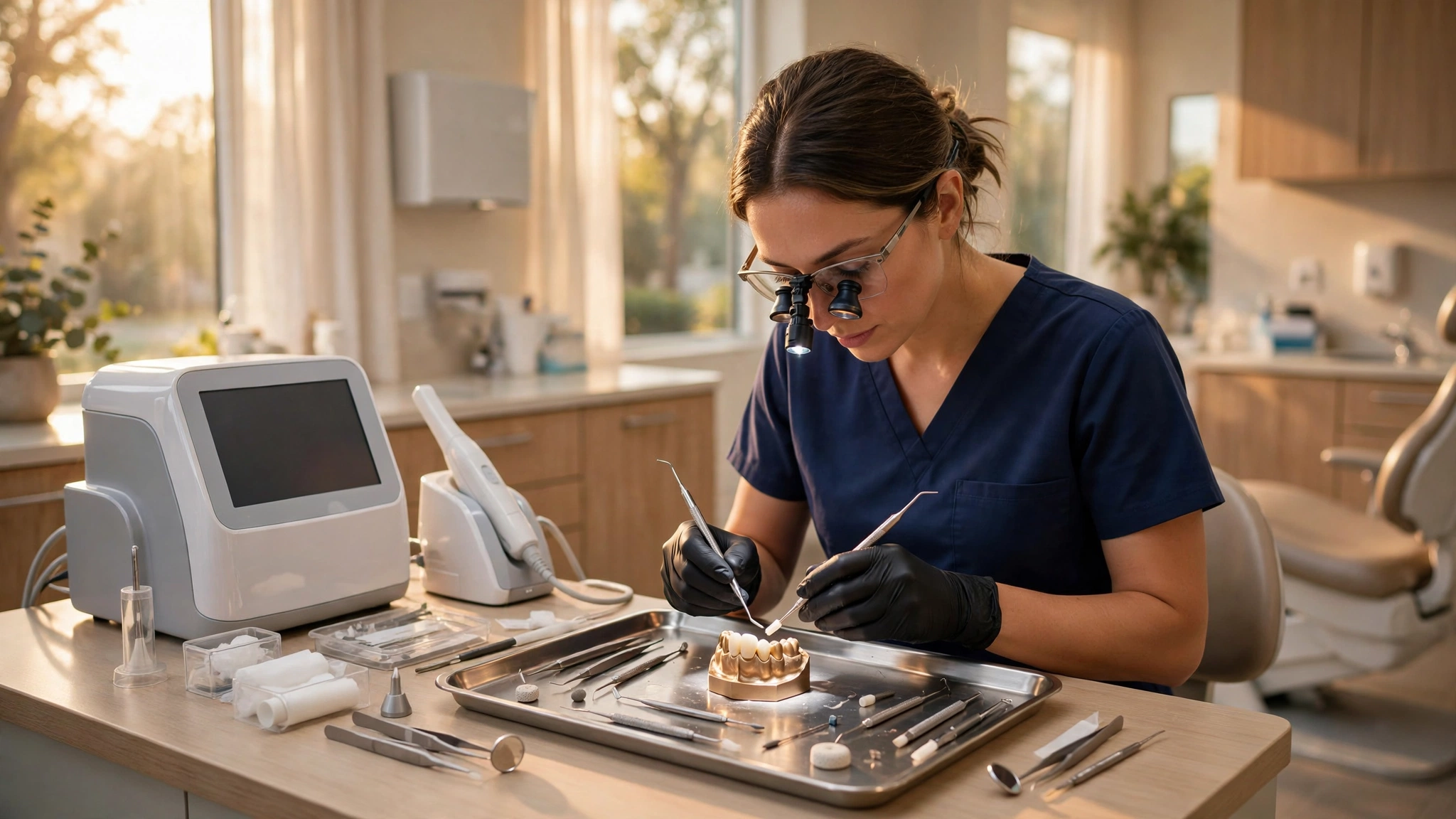
Yes. Paris Dental in Temecula repairs damaged teeth with tooth-colored fillings, same-day CEREC crowns, and root canal therapy. Your options are explained with a written estimate before treatment begins. Call (951) 577-8090 to discuss your care.
Care built around you
Teeth are remarkably resilient, but decay, cracks, infection, and wear eventually need more than watchful waiting. Restorative dentistry is the art of rebuilding what is damaged — removing disease, strengthening what remains, and returning the tooth to comfortable function. At Paris Dental in Temecula, Dr. Noorullah Azim, DDS, plans every restoration around a simple question: what is the most conservative treatment that will serve this tooth well for years to come?
Whether you need a single filling or a full-mouth plan, you will always see your options explained, your x-rays reviewed with you, and your costs estimated in writing before treatment begins. No tooth should surprise you.
Is this the right care for me?
- You have a toothache or sensitivity to hot, cold, or biting
- A tooth is cracked, chipped, or visibly damaged
- An old filling or crown has broken or fallen out
- You have been told you need a root canal
- A tooth is missing and needs replacement
- Your wisdom teeth are causing pain or crowding
- You want to restore chewing comfort and your smile
Root canal treatment
When decay or injury reaches the tooth's inner pulp, infection follows — and the pain that brings people in is usually the infection, not the treatment. A root canal removes the infected tissue, disinfects the canal system, and seals it, relieving pain while saving the natural tooth. With modern anesthesia, most patients find the procedure comparable to getting a filling.
Some patients arrive searching for an endodontist in Temecula, the specialist for complex root canal cases. Many root canals are completed comfortably right here, and when a case involves unusual anatomy or retreatment complexity, referrals are recommended when specialist care is appropriate. After treatment, the tooth typically needs a crown for protection, which is planned as part of the same treatment estimate.
Dental crowns
A crown is a custom cap that covers the entire visible tooth, restoring its shape, strength, and appearance. Crowns are recommended for cracked teeth, teeth weakened by large fillings, teeth after root canal treatment, and teeth rebuilt after significant wear. Modern ceramic crowns are shaped and shaded to blend with your natural teeth.
The process usually takes two visits: the tooth is prepared and a precise impression or digital scan is taken, then a temporary crown protects the tooth while the permanent one is crafted. At the second visit the crown is tried in, adjusted for bite, and bonded. Same-day crown technology is available for eligible cases, which Dr. Azim will discuss after your examination.
Tooth-colored fillings and bonding
For small to moderate cavities, tooth-colored composite fillings repair the tooth in a single visit. The decayed portion is removed, the tooth is conditioned, and the composite is placed in layers, hardened with a curing light, and polished to match the surrounding enamel. Unlike older metal fillings, composites bond directly to the tooth, which allows more conservative preparations.
Dental bonding uses the same material for cosmetic repairs — closing small gaps, reshaping chipped edges, or covering discoloration. It is among the simplest and most affordable ways to improve a smile, completed without anesthesia in many cases.
Dental bridges
When a tooth is missing and the neighboring teeth are healthy enough to support restoration, a dental bridge spans the gap with an artificial tooth anchored by crowns on either side. Bridges restore chewing function and prevent neighboring teeth from drifting into the empty space, which can disturb the bite over time.
A bridge requires reshaping the supporting teeth, so it is weighed against alternatives such as implants, which do not involve adjacent teeth. The right choice depends on the health of the neighboring teeth, bone condition, and your preferences — all reviewed with you after an examination and appropriate imaging.
Tooth extractions, including wisdom teeth
Saving a tooth is always the first consideration, but extraction is the honest recommendation when a tooth cannot be predictably restored — severe decay below the gumline, advanced bone loss, a fractured root, or an impacted wisdom tooth causing harm. Extractions are performed with profound anesthesia, and sedation options are available.
Wisdom teeth deserve their own evaluation. Some erupt normally and function fine; others press against neighbors, trap decay-causing bacteria, or develop cysts. Panoramic imaging shows their position and angulation, and removal is recommended only when the imaging and your symptoms support it. After any extraction, replacement options — implant, bridge, or partial — are discussed before you leave, so a gap never becomes a bigger problem later.
Full-mouth rehabilitation in Temecula
Sometimes the need is not one tooth but many — years of wear, multiple failing restorations, bite collapse, or the aftermath of long-avoided care. Full-mouth rehabilitation rebuilds the dentition systematically rather than tooth by tooth in isolation. The process starts with comprehensive records: photographs, models or digital scans, x-rays, and a careful analysis of how your teeth meet.
From there, Dr. Azim sequences treatment in phases — stabilizing urgent issues first, then rebuilding quadrants in a planned order, and finally refining the bite so the new work functions harmoniously. Sedation is available for longer visits, and a written phased estimate keeps the full picture clear from the start. Because every mouth is different, no two rehabilitation plans look alike; yours is designed around your teeth, your bite, and your goals.
Making restorative work last
Quality restorative work deserves protection. A custom night guard is often recommended after extensive treatment, especially if there are signs of grinding — it shields crowns, veneers, and implants from the forces that damaged the original teeth. Regular exams catch small issues, like a loosening margin or early wear, before they threaten the restoration.
Daily habits matter as much as the dentistry. Brush twice with fluoride toothpaste, clean between teeth, and avoid using teeth as tools. If you play contact sports, a sports guard protects the investment the same way a night guard does. With steady home care and regular checkups, well-made restorations serve comfortably for many years.
Your visit
We begin with your health history, concerns, and an examination. Dr. Azim explains the findings, appropriate options, expected visits, and estimated costs before treatment begins. X-rays or 3D imaging are used when needed to see what the eye cannot. Timing and suitability depend on your examination. Referrals are recommended when specialist care is appropriate.
Planning ahead
Restorative costs vary widely with the tooth, the material, and the complexity — there is no responsible single price without an examination. Ask for a written treatment estimate that itemizes each procedure, and confirm insurance benefits or membership eligibility before proceeding. Our team verifies PPO benefits as a courtesy, and phased treatment plans are available when several teeth need attention. Spreading treatment across planned phases also lets healing and budgets keep pace with the dentistry, without compromising the final result.
What restorative treatment costs
Every fee below is the fee for the scope shown in the same row. A core build-up, a crown after a root canal, or an extraction is priced as its own line, not folded into a total that hides it.
| Treatment | Current price | Included in price | Potential additional costs |
|---|---|---|---|
| Same-day CEREC crown (per tooth) | $1,295 | Crown design, milling, placement and adjustment | Core build-up is separate |
| Laboratory crown (porcelain or zirconia) (per tooth) | $1,295 | Laboratory-made crown and adjustment | Core build-up is separate |
| Root canal treatment (anterior tooth) (per anterior tooth; molars are a different fee) | $595 | Anaesthesia and treatment of the canal system | Core build-up and crown are separate |
| Root canal treatment (molar) (per tooth) | $995 | Anaesthesia and treatment of the canal system | Core build-up and crown are separate |
| Tooth-coloured filling (one surface) (per tooth) | $195 | Filling and shade matching | Pulp cap or root canal if the nerve is involved |
| Tooth-coloured filling (multiple surfaces) (per tooth) | $295 | Filling, adjustment and shade matching | Pulp cap or root canal if the nerve is involved |
| Dental bridge (three units) (per bridge) | $3,500 | Three-unit bridge and adjustments | Core build-up where needed |
| Post and core (per tooth) | $195 | Post, core and radiographs | Root canal and crown are separate |
| Inlay or onlay (per tooth) | $495 | Laboratory-made inlay or onlay and adjustment | Core build-up where needed |
| Simple extraction (per tooth) | $295 | Removal of an erupted tooth under local anaesthetic | Bone graft is separate |
| Surgical extraction (per tooth) | $395 | Surgical removal under local anaesthetic | Bone graft is separate |
Fees apply to the treatment scope shown in the same row. An examination determines the care recommended and the final estimate, and any additional procedure is itemised before treatment starts.
See the full treatment price list for every fee we publish.
Plan with confidence
Ask for a written treatment estimate and confirm insurance benefits or membership eligibility before proceeding. Explore payment options or request an appointment.
Call (951) 577-8090 or visit Paris Dental at 31285 Temecula Pkwy Ste 205, Temecula, CA 92592, United States.
Common questions
Does a root canal hurt?
With modern anesthesia, a root canal feels similar to getting a filling for most patients — the pain people associate with root canals usually comes from the infected tooth before treatment. The area is profoundly numbed, and sedation options are available for anxious patients. Most return to normal activities the next day.
When does a tooth need a crown instead of a filling?
A filling suits small to moderate decay. A crown is recommended when the tooth is cracked, has a large failing restoration, has had a root canal, or is structurally weakened. The decision follows an examination and x-rays showing how much sound tooth remains.
How long do crowns and fillings last?
Longevity varies with the material, the size of the restoration, bite forces, grinding habits, and home care. Many crowns serve for a decade or more, while fillings may need attention sooner. No honest timeline can be promised without seeing the tooth, which is why regular exams matter.
When is a tooth extraction necessary?
Extraction is considered when a tooth cannot be predictably saved — severe decay below the gumline, advanced gum disease, a fractured root, or impaction causing problems. Saving the tooth is always evaluated first, and replacement options are discussed before any extraction is scheduled.
Do wisdom teeth always need to come out?
No. Wisdom teeth that erupt fully, function normally, and can be kept clean may be left alone and monitored. Removal is recommended when they are impacted, cause crowding or decay in neighboring teeth, develop cysts, or create repeated infections. Imaging shows which situation applies to you.